May 13, 2026 • Maren Solley • 9 min reading time • Prices verified June 12, 2026
Away vs. Samsonite vs. Travelpro: A Spec-by-Spec Premium Carry-On Verdict
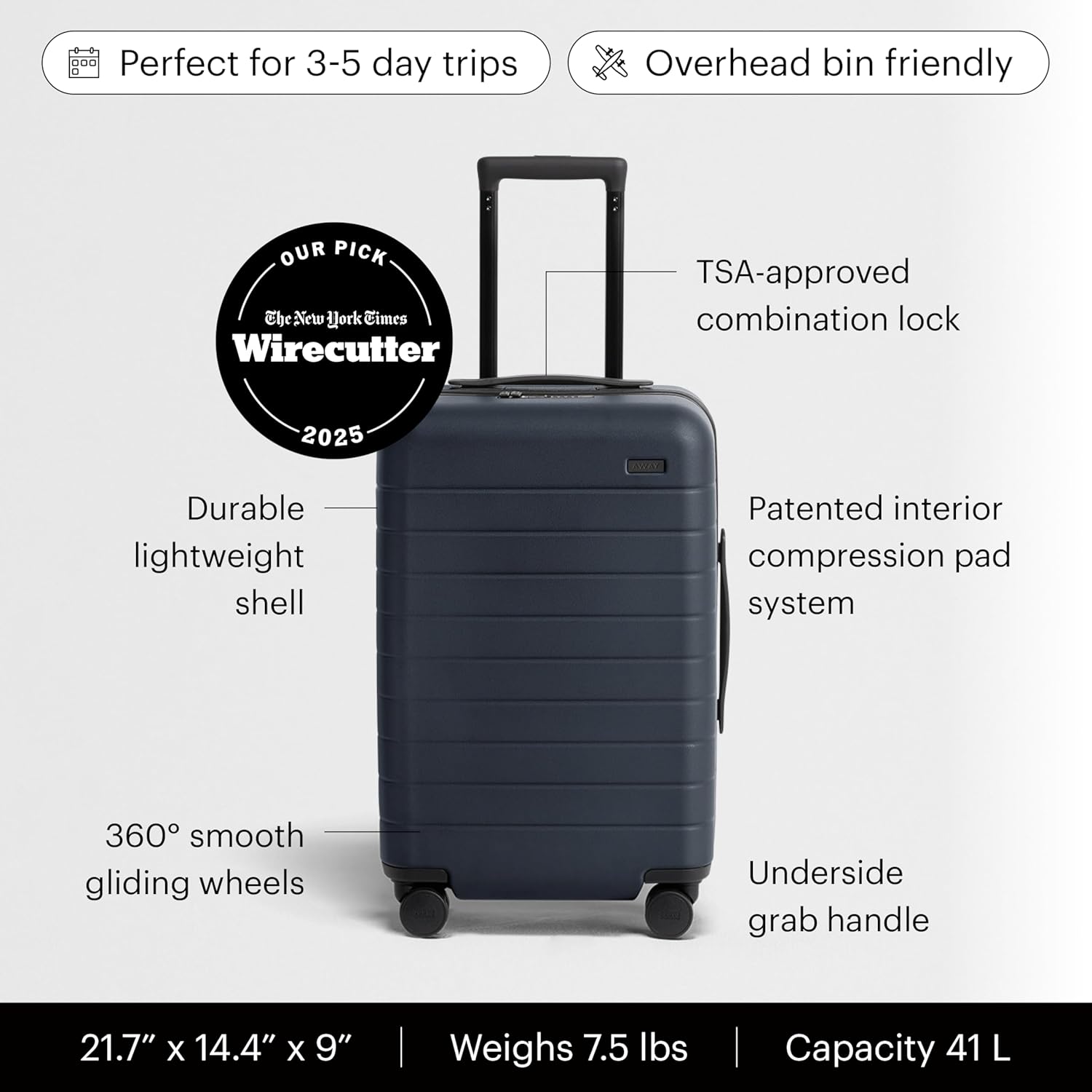
A carry-on is a hard-sided or soft-sided rolling suitcase small enough to stow in an airplane’s overhead bin — eliminating the wait at baggage claim, the $35–$75 checked-bag fee that airlines have been steadily raising since 2022, and the anxiety of wondering whether your bag made the connection. The phrase “premium carry-on” specifically refers to bags priced roughly $250 and above, built from materials meant to survive years of weekly travel rather than a single vacation. If you’re comparing Away, Samsonite, and Travelpro right now, you’re in good company and a genuinely competitive market. All three brands make credible bags. The differences are real but subtle — and which one wins depends almost entirely on your specific travel pattern.
This piece is a direct spec-by-spec breakdown. We’ll look at the carry-on models each brand is best known for, compare them on the dimensions that actually drive decisions — size, weight, shell material, wheel system, warranty, and price — and end with a plain “if X, then Y” verdict for each type of traveler.
The Contenders and the Stakes
The three brands represent meaningfully different product philosophies, even though their bags overlap in the overhead bin.
Away The Carry-On ($295–$345 depending on colorway and configuration, as of May 2026) is the direct-to-consumer brand that turned luggage into a lifestyle product. Away sells primarily through its own channels, controls its retail narrative tightly, and has built a strong community of owners who cite the clean aesthetic and the interior compression system as major selling points. The shell is polycarbonate — a thermoplastic that flexes under impact rather than cracking — and the bag ships in a standard 21.7 × 13.7 × 9 inch external dimension.
Samsonite Freeform Carry-On ($280–$300) occupies the middle ground: a legacy brand with over 110 years in luggage manufacturing, wide retail distribution, and a catalog that spans budget through premium. The Freeform is Samsonite’s current flagship hardside carry-on, built with a micro-diamond texture polycarbonate shell and measuring 22 × 14.5 × 9.5 inches external.
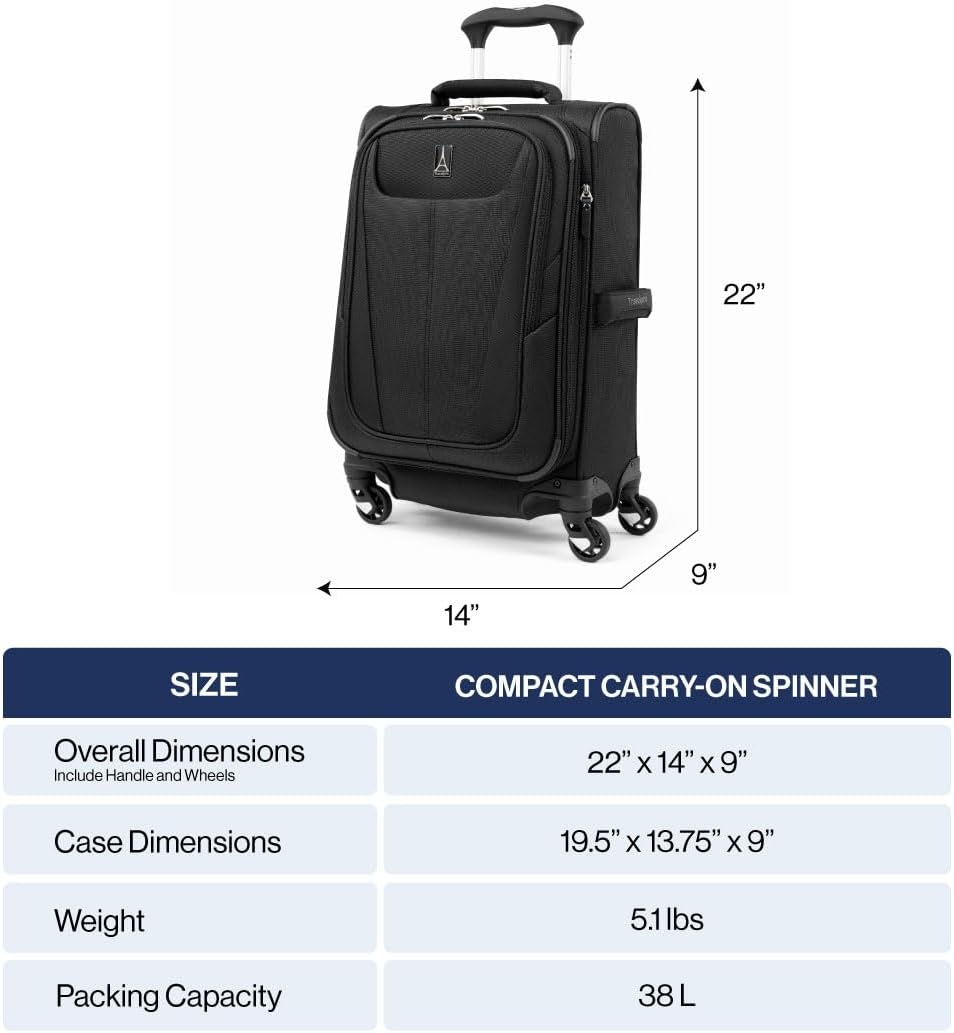
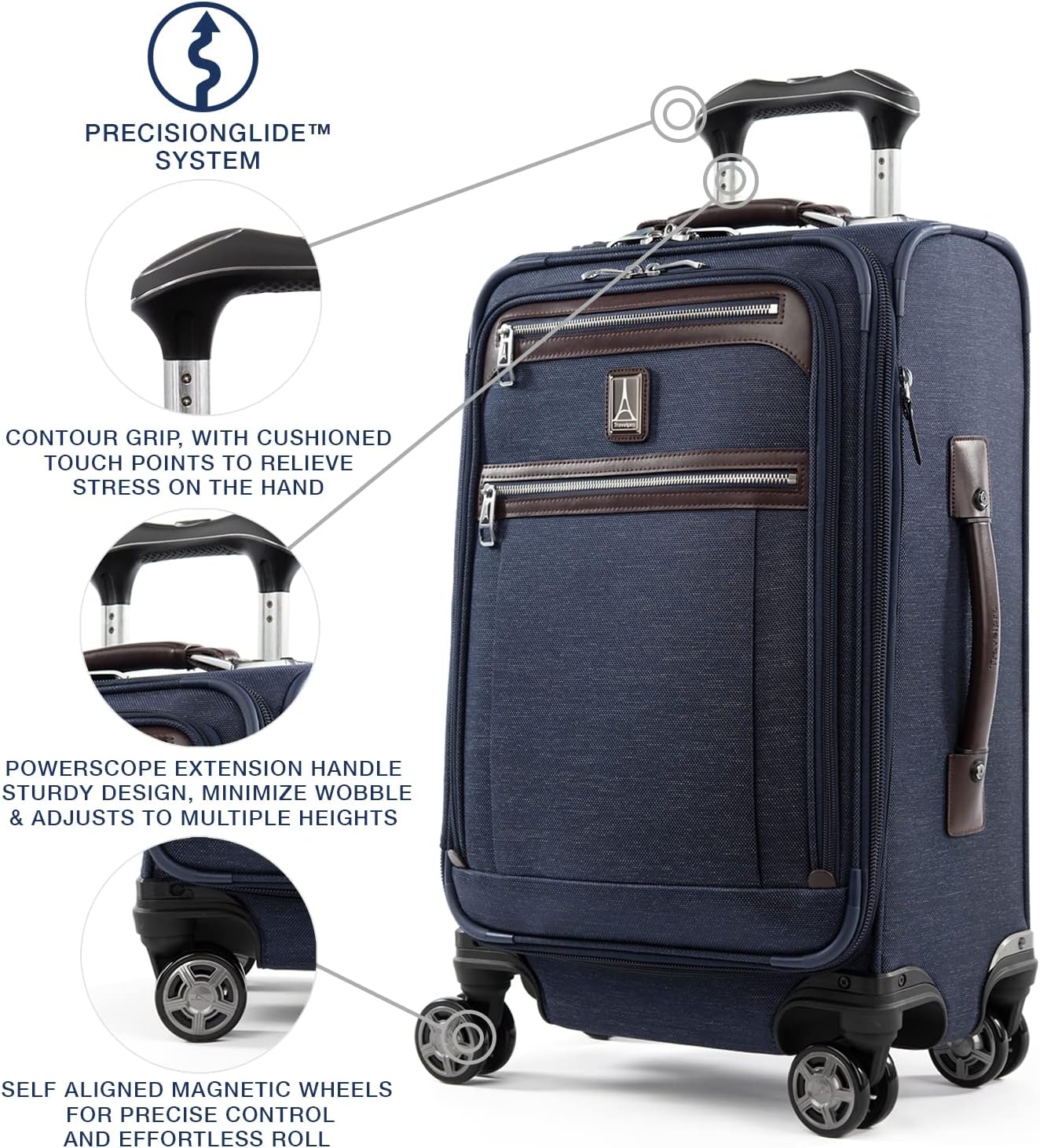
Travelpro Platinum Elite Carry-On ($299–$349) is the outlier in this group: a soft-sided spinner built specifically for airline crews and high-frequency business travelers. Travelpro has supplied flight attendants and pilots since the 1980s, and that professional DNA shows in the construction. The Platinum Elite uses a high-density nylon exterior — not a hard shell — and measures 22 × 14 × 9 inches external.
That last point matters more than it sounds. According to Smarter Travel’s guide “How to Choose Carry-On Luggage That Fits Every Airline,” published airline size limits are external maximums, but enforcement varies: hard-shell bags are measured by the shell edge, while soft-sided bags compress slightly under pressure, which can make the difference between gate-check and overhead at tight-enforced carriers like Frontier or Spirit on domestic U.S. routes.
Spec Sheet, Head to Head
Here’s where the numbers land across all three bags at a glance:
| Spec | Away Carry-On | Samsonite Freeform | Travelpro Platinum Elite |
|---|---|---|---|
| External dims (in) | 21.7 × 13.7 × 9 | 22 × 14.5 × 9.5 | 22 × 14 × 9 |
| Interior volume (L) | ~39.8 L | ~38 L | ~43.1 L |
| Bag weight (lbs) | 7.8 | 7.6 | 7.7 |
| Shell material | Polycarbonate | Polycarbonate | High-density nylon |
| Wheels | 4-wheel spinner | 4-wheel spinner | 4-wheel spinner (Duraguard) |
| Warranty | Lifetime (limited) | Lifetime (limited) | Lifetime (limited) |
| Price (May 2026) | $295–$345 | $280–$300 | $299–$349 |
A note on weight: All three bags come in within 0.2 lbs of each other — effectively identical once you start loading them. The real weight conversation is about what you put inside, not the shell.
A note on volume: Travelpro’s published 43.1 L interior is meaningfully larger than the competition. That’s partly because soft-sided construction eliminates the structural frame material that eats into packing space on hard shells. As noted in The Points Guy’s review “Best Carry-On Luggage for Frequent Flyers,” the Platinum Elite’s usable cubic footage is one of its key differentiators from hard-shell competitors at the same price point.
Where Each Brand Actually Wins
Away: Aesthetics, Organization, and the Direct-to-Consumer Experience
Away’s strongest argument is the interior. The Carry-On ships with a built-in compression system — a rigid divider with a cross-strap mechanism that pushes down on loose items — and a dedicated laundry bag that snaps into the shell. It’s a genuinely considered packing setup, and owners consistently report that it changes the way they think about packing, not just the bag they use to do it.
The exterior is clean in a way that Samsonite’s busier texture panels aren’t: flat polycarbonate in a wide color palette, minimal branding. Condé Nast Traveler’s carry-on roundup “The Best Carry-On Luggage of 2025” has flagged Away’s aesthetic consistency as a reason the bag resonates with travelers who care about how their gear looks in hotel lobbies and on conference room floors.
The direct-to-consumer model also means Away handles warranty claims more directly than legacy brands sold through third-party retailers. Away’s lifetime warranty covers defects in materials and workmanship — it does not cover airline damage (dents, scratches, broken zippers from rough handling) unless the defect was pre-existing. That’s a common and important limitation across all three brands.
Where Away loses ground: the smooth polycarbonate shell scratches visibly, especially on darker colorways. Owners across aggregated reviews note that matte black and navy versions show scuffs within the first few months of regular use. Away’s warranty language explicitly categorizes scratches as cosmetic wear, not a covered defect. If the bag lives in cargo holds regularly, this matters.
Travelpro
$160.00
In stock on Amazon
Check price on AmazonSamsonite Freeform: Durability-Tested Shell, Widest Service Network
Samsonite’s institutional advantage is scale. The brand operates or partners with repair and warranty centers across more than 100 countries — a practical differentiator that AFAR highlighted in “The Best Carry-On Bags for Every Kind of Traveler” for travelers who spend significant time in Southeast Asia, the Middle East, or Sub-Saharan Africa, where independent luggage repair is inconsistent.
The Freeform’s micro-diamond texture shell is materially harder to scratch visibly than Away’s smooth polycarbonate — the surface pattern diffuses scuffs across the texture rather than leaving a bright linear mark. Samsonite rates the Freeform’s shell as scratch-resistant, and across aggregated owner reviews, the consensus is that the bag holds up better aesthetically over two-plus years of weekly travel.
The Freeform’s multi-directional spinner wheels draw consistently positive long-run reviews for smooth indoor rolling but are more frequently flagged for wobble on uneven outdoor surfaces — cobblestones, airport jet bridges with gaps — than the Travelpro equivalent.
At $280, the Freeform is also the most accessible price point in this comparison for a flagship hard-shell product. Cost-per-use math favors Samsonite over a three-to-five year ownership window if you’re comparing sticker price alone, though Away and Travelpro close that gap meaningfully with their own lifetime warranty terms.
Travelpro
$160.00
In stock on Amazon
Check price on AmazonTravelpro Platinum Elite: The High-Volume, High-Frequency Workhorse
Travelpro is the choice you make when you’re optimizing for how the bag functions over how it looks on social media. The Platinum Elite’s soft nylon exterior is more resistant to structural cracking than hard-shell alternatives — polycarbonate does crack under sustained lateral stress, particularly when bags are stacked in tight cargo holds — and the soft construction means the bag can be compressed slightly to fit in overhead bins on regional jets where cubic inches are genuinely contested.
The Duraguard spinner wheel system is manufacturer-rated for higher rotation cycles than standard plastic-wheel alternatives and consistently draws praise in long-run professional reviews. New York Times Wirecutter’s review “The Best Carry-On Luggage” has cited the Platinum Elite as a top pick for frequent business travelers specifically because of wheel and handle durability under sustained weekly use.
The Platinum Elite also delivers 43.1 L of usable volume — roughly 4–5 L more than the Away Carry-On in the same external footprint. For travelers who push the single-bag limit on every trip, that margin is real. It’s approximately the volume of a medium compression packing cube, which converts into one extra jacket or two extra days of clothes depending on packing style.
The legitimate downside: the soft exterior marks more easily than hard shell when wet or dirty, and the bag reads as more “business utilitarian” than “design object.” If aesthetic premium is part of what you’re paying for, the Travelpro isn’t going to deliver it.
Travelpro
$390.00
In stock on Amazon
Check price on AmazonThe Warranty Math Nobody Does
All three brands advertise lifetime limited warranties, and the delta is in the “limited” clause. None of the three covers airline-inflicted damage — dents, broken handles, cracked shells from rough handling — as a standard warranty item. That’s an airline damage claim governed by Montreal Convention rules and carrier liability caps, not a manufacturer defect. Samsonite’s global service network does give it a practical repair advantage that Away and Travelpro’s more centralized warranty systems can’t fully match for international travelers. If you’re filing a warranty or repair claim from Nairobi or Ho Chi Minh City, the Samsonite service infrastructure is meaningfully more accessible than filing through a brand whose service centers are concentrated in North America and Western Europe.
One additional nuance worth flagging: Smarter Travel’s carry-on guide notes that airline enforcement of size limits has tightened on budget carriers in particular since 2023. If your travel mix includes budget domestic legs, the soft-sided Travelpro’s ability to compress a half-inch under pressure is a genuine functional edge over the fixed-dimension hard shells — not just a theoretical one.
The Decision Framework
If you fly 20–50 times a year on business or remote work, care about long-term functional durability over aesthetics, and want maximum packing volume: the Travelpro Platinum Elite is the professional’s call. The wheel system, the volume, and the soft-shell flexibility for tight overhead bins justify the price. It’s what high-frequency flyers actually use — and what New York Times Wirecutter’s review of carry-on luggage recommends for that traveler profile specifically.
Travelpro
$390.00
In stock on Amazon
Check price on AmazonIf you travel 5–20 times a year, want a bag that looks as considered as the rest of your kit, and value a streamlined interior packing system: the Away Carry-On is the right balance of design, organization, and warranty access. Accept that surface scratches will accumulate on smooth polycarbonate and treat them as patina. The compression system and clean exterior earn their price.
Travelpro
$160.00
In stock on Amazon
Check price on AmazonIf you’re going to move between continents regularly, spend significant time in markets where warranty service accessibility matters, and want a hard shell that holds up visually over multi-year use: the Samsonite Freeform earns its place. The scratch-resistant micro-diamond texture and global service network are genuine differentiators — not marketing language — as AFAR’s carry-on roundup and broader owner review aggregates confirm.
Travelpro
$160.00
In stock on Amazon
Check price on AmazonThere’s no bad choice in this tier. The meaningful question is which of these bags fits the actual shape of your travel year. A bag optimized for a road warrior logging 40 trips a year is a different tool than one optimized for a design-conscious traveler taking eight trips. Both are valid — and both have a clear answer above.