May 23, 2026 • Maren Solley • 8 min reading time • Prices verified June 12, 2026
Vacuum Compression Bags for Carry-On Travel: Do They Actually Help?
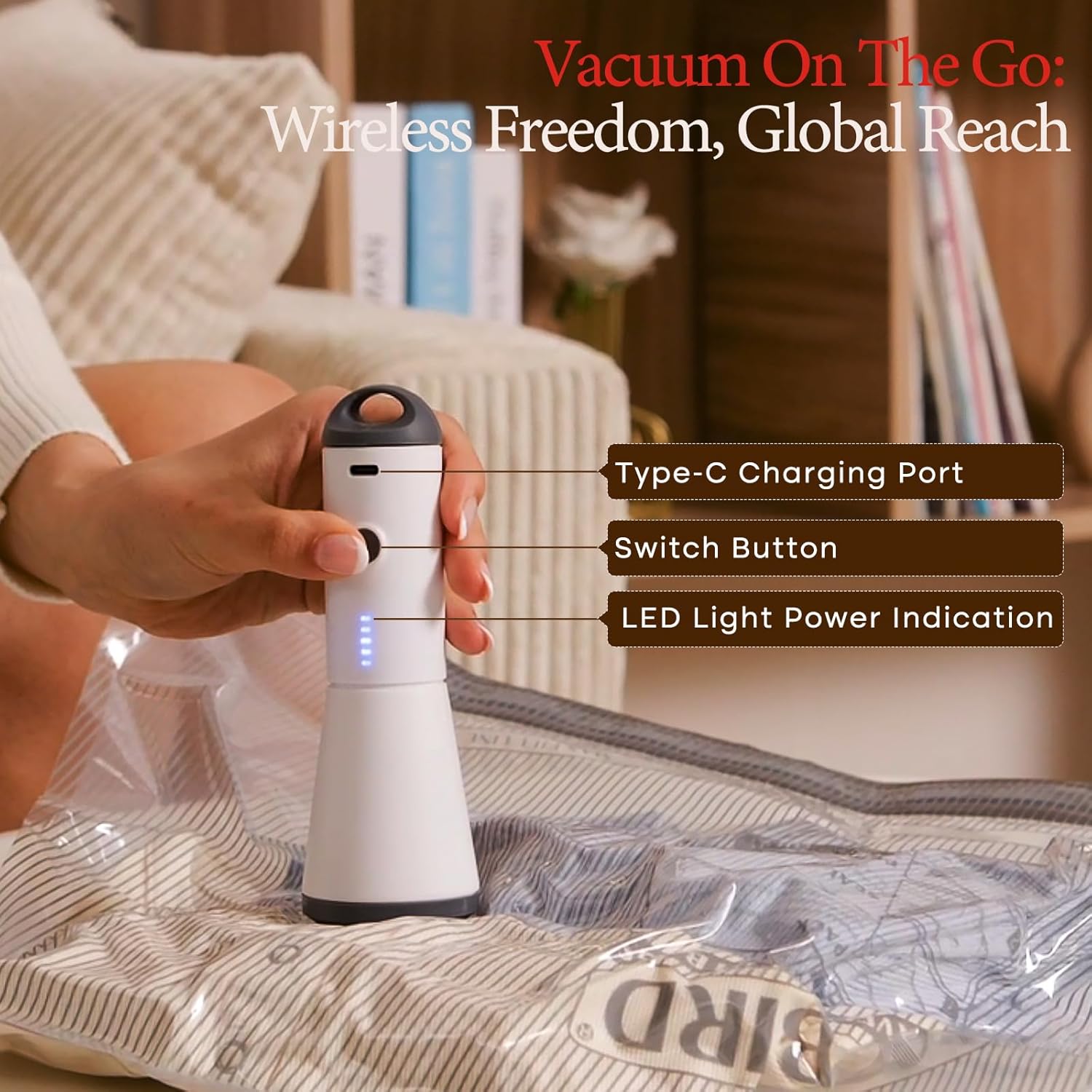
Vacuum compression bags — the ones you roll or vacuum-seal to suck all the air out of a bundle of clothes — have been a packing staple for checked-baggage travelers for years. The pitch is simple: remove the air, shrink the volume, fit more stuff. If you’re checking a big suitcase, that logic holds reasonably well. But carry-on travel operates by a completely different set of rules, and the question of whether compression bags actually help when you’re living out of a 40-liter backpack or a 22-inch roller is more nuanced than it first appears. This article breaks down how these bags work, where they genuinely earn their keep, and where they quietly work against you — so you can make a clean call before your next trip.
| EDITOR'S PICK[Aerotrunk Compression Packing C…](https://www.amazon.com/dp/B0CLVYTLFB?tag=greenflower20-20) | Mid-tier[Compression Packing Cubes for T…](https://www.amazon.com/dp/B078LJ4VNN?tag=greenflower20-20) | Budget pick[Vacbird Vacuum Bags for Travel…](https://www.amazon.com/dp/B0DRNRC5H5?tag=greenflower20-20) | |
|---|---|---|---|
| Count | 6-Pack | 6 Piece | 15 Combo |
| Material | — | Lightweight | — |
| Vacuum pump | ✗ | ✗ | ✓ |
| Zipper type | Double Zipper | — | — |
| Price | $59.99 | $49.95 | $34.99 |
| See on Amazon → | See on Amazon → | See on Amazon → |
What Vacuum Compression Bags Actually Do (And Don’t Do)
Let’s start with a distinction that trips up a lot of travelers: volume and weight are not the same thing. Vacuum compression bags reduce volume — the physical space your clothes occupy. They do not reduce weight. Your down jacket weighs the same whether it’s lofted to full puff or squashed into a brick. This matters enormously once you’re flying carry-on, because most airlines now enforce both a size limit and a weight limit on cabin bags.
A “compression bag” in this context is a sealed plastic or nylon pouch with a one-way valve. You stuff your clothes in, seal it, then either roll it (pushing air out through the valve) or use a hand pump or vacuum cleaner to remove the air mechanically. The result is a dense, flat package that takes up less linear space in your bag.
The confusion is that two very different products get sold under the same “compression” label:
- Roll-type compression bags (no pump required): you roll out the air by hand. Lightweight, simple, no accessories needed.
- Vacuum-seal compression bags (pump or vacuum required): achieve more dramatic compression, but you need access to a vacuum or a pump at both ends of the trip to restore them.
For carry-on travelers, this distinction is the first real fork in the road.
The Carry-On Math: Volume, Weight, and the Airline Variable
By the numbers:
| Bag type | Typical volume reduction | Weight change | Pump required? |
|---|---|---|---|
| Roll-type compression bag | 20–40% | None | No |
| Vacuum-seal bag (hand pump) | 50–70% | None | Yes |
| Standard compression packing cube | 15–25% | None | No |
Per The Points Guy’s overview of carry-on rules, the most widely enforced carry-on size limit in 2026 remains 22 × 14 × 9 inches (56 × 36 × 23 cm) on major U.S. carriers, though budget carriers in Europe and Southeast Asia enforce stricter linear dimensions and lower weight caps — sometimes as low as 7–10 kg total. Smarter Travel’s reporting on airline enforcement trends has consistently noted that weight enforcement at the gate is becoming more common on transatlantic routes, particularly on low-cost long-haul carriers.
Here is the critical implication: if your carry-on is already at or near its weight limit, compression bags give you zero benefit. You’ve compressed a 4 kg bundle of clothes into a 2 kg-looking package — but it still weighs 4 kg.
Where volume compression does help is a different scenario: when your bag has unused cubic space but not unused weight capacity. If your 40-liter pack physically can’t close around a bulky fleece, rolling that fleece into a compression bag to reclaim 30% of its volume is a genuine win. The fleece still weighs the same, but now your bag zips.
REI’s packing guidance makes this point clearly: heavy, dense items like jeans and fleece layers benefit from compression because they are already heavy relative to their volume; light, lofty items like down insulation benefit even more dramatically, since they are mostly trapped air.
Where Compression Bags Help Carry-On Travelers
1. Managing loft in cold-weather kits
Down and synthetic insulation is the best use case. A packable down jacket in its native state might occupy 6–8 liters of your bag. In a roll-type compression bag, owners consistently report getting that down to 2–3 liters. For a traveler packing a winter kit into a 36-liter backpack — say, a Tortuga Setout or an Osprey Farpoint 40 — that difference can be the margin between a closed zipper and a checked bag.
2. Compressing bulk in mixed-climate trips
Multi-stop itineraries that cross climate zones — a Southeast Asia loop that starts in the humidity of Bangkok and ends in the altitude of Chiang Mai — typically require clothing that has no business being in the same bag. Compression bags let you flatten the bulkier cold-weather layers and free up accessible space for what you’re actually wearing today. Condé Nast Traveler’s packing guides have repeatedly flagged this use case as the strongest argument for compression, noting that the organizational benefit often exceeds the pure space benefit.
3. Containing dirty laundry
A sealed compression bag doubles as a dirty-clothes containment system. Roll the air out, and you’ve reduced both the volume and the odor-migration problem. This is a small thing, but travelers doing 2–3 week trips without checking a bag consistently mention it in long-run reviews as one of the underrated reasons they keep compression bags in their kit.
Where Compression Bags Work Against You
1. The repack problem
This is the decisive issue for frequent travelers: you can compress your bag at home, but after a hotel room or an Airbnb, you’re repacking without a vacuum and possibly without a flat surface. Roll-type bags are manageable; full vacuum-seal bags require either carrying a hand pump (adding weight and bulk to your kit) or accepting a much less compressed repack. Travelers doing multi-city trips with 2–3 night stays consistently flag this in reviews as the point where vacuum-seal bags become more hassle than they’re worth.
2. Wrinkle concentration
Compression flattens air out of fabric — it also presses fabrics together under force. For wrinkle-prone materials (linen, cotton dress shirts, anything structured), the compression process essentially sets creases into the fabric over the course of a flight. Roll-type bags are less aggressive than full vacuum-seal, but neither is kind to anything you’d wear to a meeting without ironing first. Travelers packing for business trips or hybrid work-vacation situations should weigh this carefully.
3. Weight confusion at the gate
A well-compressed bag looks lighter than it is. Experienced gate agents have seen this before — and at airports with strict weight enforcement, a bag that physically appears small but registers heavy at the scale creates exactly the friction you’re trying to avoid. The Points Guy’s carry-on compliance coverage notes that enforcement at the gate is most aggressive when agents feel a traveler is gaming the system; a suspiciously dense carry-on is a flag.
4. TSA and security screening
Dense, compressed bundles of clothing can obscure other items in X-ray screening. This doesn’t guarantee a bag check, but across aggregated traveler reports, bags with multiple compression pouches are opened for secondary inspection at higher rates than those with standard packing cubes or loose packing. It’s not a disqualifying factor, but it adds friction at security.
Roll-Type vs. Vacuum-Seal: The Decision Is Already Made for Most Carry-On Travelers
If you’ve gotten this far, the right answer for most carry-on use cases is already visible: roll-type compression bags, not vacuum-seal.
The reasons are practical:
- No pump to carry, lose, or forget
- Repacking on the road is fast and manageable
- The compression ratio (20–40%) is sufficient for the use cases that actually matter — lofty insulation, bulk fleece, dirty laundry containment
- They’re lighter per unit than vacuum-seal bags with rigid valves
Vacuum-seal bags make sense in one specific carry-on scenario: a single-destination trip where you pack once at home and unpack once at the destination — essentially treating your carry-on like a checked bag you happen to be carrying. A digital nomad moving apartments, or a traveler relocating for a month-long stint, might genuinely benefit from the higher compression ratio with no mid-trip repack penalty. Everyone else is better served by roll-type.
Named products worth researching in the roll-type category include the Eagle Creek Pack-It Compression Cube, which reviewers at Condé Nast Traveler have called out as a durable option that doubles as a standard packing cube; and the Matador Packing Cubes, which owners report offer meaningful compression with a lighter weight footprint than most competitors. Both are manufactured with durability specs that support long-term kit use rather than single-trip disposability.
The Decision Rule
If you’re deciding whether to add compression bags to your carry-on system, here’s the clean version:
- If your bag can’t physically close around bulky layers: roll-type compression bags will likely solve your problem. Buy them.
- If your bag closes but you’re over the weight limit: compression bags will not help you. Address the weight directly — leave something behind or shift heavier items to your personal item.
- If you’re packing wrinkle-sensitive clothes for business travel: skip compression bags. Use structured packing folders or standard cubes instead.
- If you’re doing multi-night stops and repacking frequently: roll-type only. Full vacuum-seal bags are not compatible with a dynamic itinerary.
- If you’re packing cold-weather insulation into a sub-40L bag: this is the strongest use case. Roll-type compression bags are genuinely useful here and worth the $15–$30 investment.
The technology works. The question is always whether your specific packing problem is a volume problem or a weight problem. Get that diagnosis right, and compression bags are a solid piece of kit. Get it wrong, and you’ve added gear weight to a system that needed a different fix entirely.